welcome

welcome
Showing posts with label go green. Show all posts

Wednesday, May 19, 2010

Modern Life: Kids Shows and Environment

Rocko's Modern Life R-E-C-Y-C-L-E


Thinking back to your favorite childhood shows, can you remember them talking about the environment or recycling? It seems difficult to recall if you did learn about these issues from media. In the example from the 1990’s “Rocko’s Modern Life,” that many might remember, there is a wonderful song about recycling. Surprisingly even at a young age children’s shows are tackling large issues. When watching this clip the garbage character covers issues of recycling, conservation, and not polluting. He goes over how the ozone is deteriorating because of peoples waste and goes over the fact that if people do not do something they will pay for it. The song also even goes into the cutting down of trees and how that reduces the earth’s oxygen supply, which is also harmful to the environment and us. The lyrics at this part say “it’s not enough to sit around and grieve,” which is interesting because it is calling for action from a young age group who may not even truly understand the message they are receiving. The song is happy, but uses a scare tactic that if we do not act, we’ll get what we deserve. This example in particular is a call for civil engagement to a younger audience by showing all the characters coming together and discussing this issue.

At an early age children are being exposed to ideas and norms of being a “good citizen.” What are kids seeing? Now there is even more of a cultivation of the “go green” attitude being promoted to younger age groups. As we can see even starting in the 1970’s these ideas have been brought up in children’s show. “Sesame Street,” “Reading Rainbow,” “The Magic School Bus,” “Captain Planet,” all began educating kids about environment. Children’s shows now continue to bring up the ideas of recycling and helping the earth, and show it being a rewarding act and a civic duty. The youth is important to target at a young age because they are easily impressionable during the critical period of their lives. If environmental issues are being shown as important and show kids ways to take action on and individual or group level and the rewards these actions will have, they may be more likely to continue these ideas through out their lives.

Another interesting thing about how children are learning about how to be involved in environmental issues is the use of the Internet. Children television networks have websites and links on how to be green. For example Nick Jr. has a whole page dedicated to creative recycling, turning recycling into fun craft activities. Also PBS has a short clip show called “The Greens,” which is a family that gives children fun environmental tips and awareness. The website has green games, tips, and the clips for kids to interact with. The communication of environmental awareness starting at a young age helps for a more active and engaged generation.

http://www.nickjr.com/crafts/all-shows/creative-recycling-crafts/all-ages/index.jhtml


http://meetthegreens.pbskids.org


Coleen Maloney

Wednesday, April 21, 2010

America's Next Top Trend is... Going Green!

Reality shows have rapidly grown in television within the past decade. From MTV’s Real World to The Hills, reality shows have become a significant part of television. Having become a reality show addict myself, I decided to investigate how reality shows generally portray environmentalism. I examined three shows: Survivor, America’s Next Top Model, and Keeping Up With the Kardashians. These were selected based on three sub-genres of reality televsion: the early reality shows, celebrity glorification, and scripted reality.

Survivor made its television debut in 2000. Countless media outlets, including ABC News have labeled the show to be one of the “Top Ten Reality Shows of the Decade.” The show unites a group of strangers who are forced to reside in extreme natural habitats. By its second episode, they had reeled in over 18 million viewers.

In general, environmentalists are generally pleased with the show’s premise. Although the show doesn’t report blatant “go green” ideas, the fact that the entire series is based off different, natural, and inhabited locations can leave viewers with an unconscious appreciation for the Earth. EarthTalk Magazine mentions a few disturbances, such as the affects on the spikes of tourism among those regions. However, these affects are considered minimal.

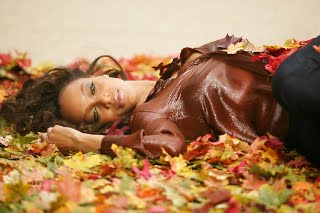
When Supermodel Tyra Banks launched the reality show America’s Next Top Model, the show became an immediate sensation. The ninth season in particular emphasized a “go green” theme. Tyra starts the season off by revealing the models’ method of transportation: a 100% biodiesel bus decorated with plants and seats made out of recycled tires. Many photoshoots also had environmental themes. The contestants were asked to pose rock-climbing in couture outits, model as a flower, and fashion outfits made of recycled materials. In addition to photoshoots, the model house consisted of nature-themed decorations and the individual commentaries of models had nature backdrops.

I use the phrase “celebrity glorification” to express people’s fascination and admiration with celebrities. Having a powerful celebrity consistently promoting “go green” ideas can leave viewers to think of pro-environmentalism ideas as being “cool.” Although Tyra Banks thinks collectively of the public's interest when accentuating the importance of preserving nature, how credible of a source is she? Why should I, a college student, trust the words of a former Victoria’s Secret model?


The same question comes into play when watching Keeping Up With the Kardashians. A show that follows the daily lives of the Kardashian family, the show is an example of a “scripted reality.” How can a 20-minute show accurately reflect a week of events filmed? In the third season, one of the sisters, Khloe, is approached by PETA to participate in the “I’d rather go naked” campaigns. Despite Khloe’s personal body image insecurities, she decides to partake in the campaign after seeing videos of animals being treated cruelly.

Sure, I believe that we don’t let silly celebrities interfere with our thinking. But with millions and millions of viewership, there has got to be some unconscious consequences for being exposed to reality shows. I am generally a believer in preserving nature, but how much of an influence did reality shows come into play? These messages are on television, which is easily accessible. Can this lack of the messenger’s credibility be dangerous? This time, don’t let Survivor’s tribal council or Tyra dictate. You be the judge.

-Lydia Kye